« How to Understand Color, Chroma, and Value | Main | 2-Step Business Plan for Artists & Other Creative Entrepreneurs »
The Broad Range of Erasers
When I was a kid someone, probably my parents, gave me a huge Pink Pearl eraser that said, “To fix BIG mistakes”. I’m sure they thought it was cute. I didn’t. I thought it was a statement that mistakes were BAD, ergo, my written mistakes were bad and thus, so was I. Had I known better, I would have known mistakes are NORMAL and erasers are wonderful tools, both for correcting and for mark making. Erasers have come a long way since the era of breadcrumbs.A good eraser will remove marks cleanly, completely, and without leaving marks on the paper or drawing surface, and all without damaging the surface.

I was curious about the different kinds of erasers that are available and started down this really interesting and useful rabbit hole. Most of what follows is from manufacturers websites or other places I gleaned information from on the web.
WHAT MAKES A GOOD ERASER: A good eraser will remove marks cleanly and without damaging your paper or surface the marks were made on.
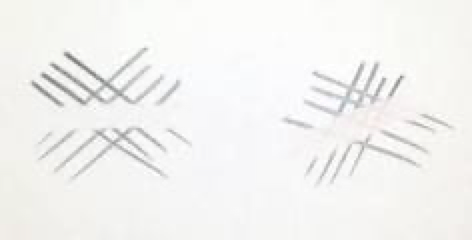
Not all erasers work the same way, so it's helpful to choose the right eraser for the job. Because erasers are inexpensive you can have a variety on hand to do the job you require.
There are 5 basic types of erasers: Natural rubber, synthetic rubber, gum, kneaded, and vinyl/plastic/polymer. Let’s take a look at erasers and their possibilities! There are a couple of other ‘tools’ that can be used as erasers, so read on.
VINYL/PLASTIC ERASER: Vinyl/Plastic erasers seem cleaner than rubber erasers because their crumbs are not as fine as a rubber eraser. Sometimes the crumbs of a rubber eraser are so fine it can be a bit difficult to get rid of them all.


Vinyl and plastic erasers come in both white and black and come in a variety of shapes. A black eraser, when used to erase on a dark surface, won’t leave a (potential) white ghosting effect that might be left with a white eraser. It is great for removing charcoal and graphite. White plastic erasers not only erase pencil marks better than the old-school style pink eraser but because they're non-abrasive, they leave the paper fibers relatively intact. ... Sometimes the pink residue won't scrape off - it's embedded into the paper and is at some angles, a very noticeable discoloration. The pink erasers are often at the end of pencils or are the kind that slip onto the end of a pencil.
Many companies make vinyl and plastic eraser. Below are a few of them.
STAEDTLER:MARS PLASTIC: First manufactured in 1967, Mars Plastic erasers are composed of Polyvinyl chloride with phthalate plasticizers and Calcium carbonate fillers. Mars Plastic erasers leave copious small white crumbs that can be removed with vacuuming or a soft brush. This superior quality soft white eraser removes graphite marks cleanly and completely from paper, vellum, and drafting film. Includes eraser sleeve for easy handling. Latex and phthalate free. Minimal crumbling and no discoloration of eraser on paper.
MARS PLASTIC COMBI: Latex free eraser for pencil marks on paper and film, and blue eraser for drawing ink on paper and matte drafting film. Also erases overhead projector pen marks on overhead film.
SANFORD’S MAGIC RUB: A vinyl eraser for use on polyester-based drafting film, acetate, or drawing paper. It erasers delicate drawings cleanly without smudging.
MUJI: Muji is a Japanese company that makes a variety of drawing, writing, erasing, and other wonderful tools for the artist as well as objects for the home, apparel, and other fun items.
FACTIS: Plastic - Technical eraser for film and drafting. Ideal for graphite and for the classroom use. Made by General's.
Extra Soft - A super soft eraser that will erase pastels and charcoal. It cleans watercolor paper without roughing it.
FACTIS OV 12: This oval shaped white eraser is an all-purpose eraser that won’t crumble or crack.
FACTIS BM-W MECHANICAL ERASER: This is a pencil like eraser that can be cut to give a good, sharp edge.
PENTEL POLYMER: A soft, white, polymer-synthetic eraser that is specifically used to remove graphite pencil marks completely, leaving behind no smudges, dust, or ghost markings. Because they can erase cleanly with very little pressure, users do not damage their paper or other writing and drawing surfaces as they remove markings. The material in these erasers remains soft and does not harden or crack with age. Each eraser features a protective, sliding sleeve to keep it clean and soft even after repeated use. The rectangular-block shape facilitates cleaning marks in both large and small areas. It also comes as a slip on to go over a regular pencil.

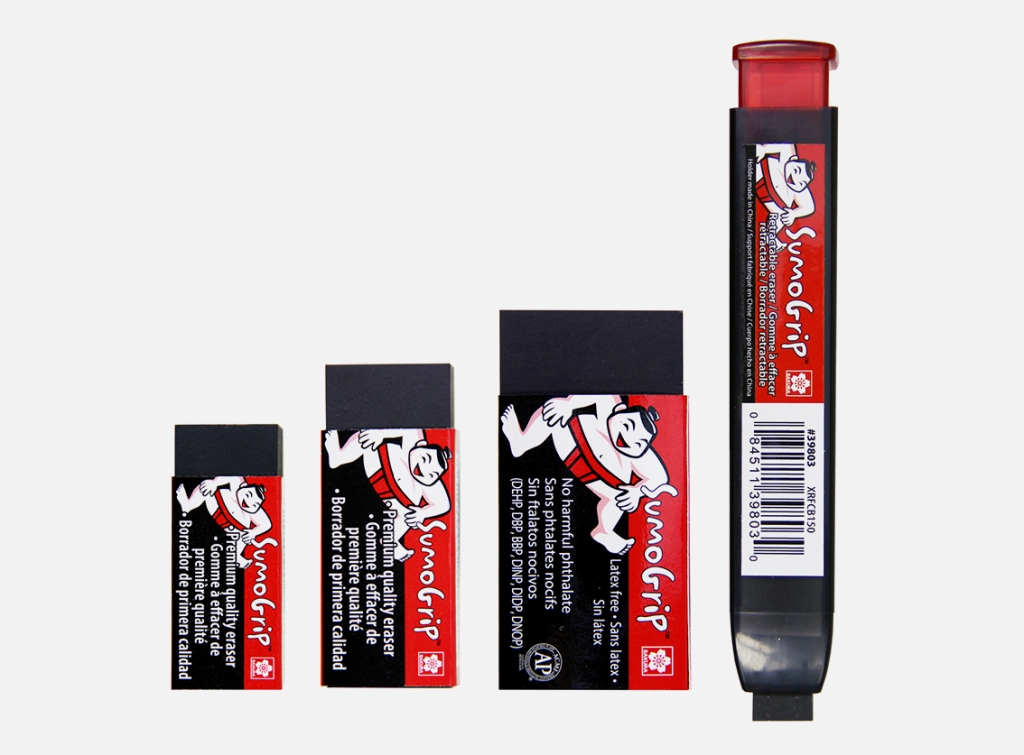
SAKURA SUMOGRIP ERASER: This series of erasers features microporous foam technology to remove graphite marks from paper surfaces for artists, students, and architects. These are composed of net-like cells that pick up graphite marks and, according to their website, erases better across the surface. Reticulated open-cell foam works like ultra-fine sandpaper to get into the small grooves and pits of the paper surface. The SumoGrip Eraser comes in black or white and requires minimal pressure to remove graphite lead from B to 2H. According to their website the new foam technology of SumoGrip erasers vastly improves the pic-up of micro graphite particles from paper substrates that white PVC erasers leave behind. My good friend and colored pencil artist Kathryn Hansen uses this eraser along with a kneaded eraser.
TOMBOW 67304 MONO SAND: consists of natural rubber latex (made from the sap of rubber trees) along with natural silica (sand) grit. Because of their abrasive texture, the erasers remove markings from colored pencils and graphite pencils. These abrasive erasers also remove the markings made by the ink from ballpoint pens, rollerball pens, and some felt tip markers. Colored markings from watercolor brush pens are no match for these erasers either. Artists use silica erasers to create artwork highlights through the subtle removal of color from strategic spots in their paintings and drawings. The materials in these erasers are natural and sourced via environmentally sustainable process. Tombow
TECHNIK: Technical eraser ideal for graphite pencils and sticks and well as charcoal cores. Professional quality. Raw Materials Art Supply
F.C. DUST FREE: F. C. stands for Faber-Castell. These erasers are great for correcting graphite artwork. They erase cleanly with no smudging, and their dust rolls in one piece. Faber-Castell
PINK PEARL: This is an all time favorite. Soft and pliable, it always gives smudge-free erasures. It’s beveled on the ends for better control. Available almost everywhere.

ARTGUM: A dual purpose eraser made from rubber, this eraser cleans paper, fabric, and leather without scratching or smudging. Fine dry powder cleans the drawing surface by absorbing graphite and dirt. Even with aggressive rubbing they should not tear paper. Many companies make art gum erasers. They come in a square or rectangular format. ArtGum Erasers

KNEADED ERASER: A kneaded eraser is the primary type of eraser that most graphite/charcoal artists use. It picks up the graphite without smearing or damaging the paper. It can be shaped into a point to lift out small highlights in the eyes and hair. There are several manufactures of kneaded erasers and some are softer and more tacky than others. My favorite is Prismacolor, but you should choose the one that best fits your need. They all work in the same way. To clean them you stretch and fold them until they become light grey again. One thing to consider is that you don’t want to introduce oils into the eraser and then use it on a drawing as it could transfer the oils onto your paper. Some people use kneaded erasers to pick out small areas in their oil painting. Make sure you keep that eraser segregated from your drawing eraser. I would forgo hand lotion before drawing. And as addicting as kneaded erasers are to knead when you are cogitating what to do next, try not to….You are introducing oils from your skin into the eraser shortening it’s life and adding oils that might leave marks on your paper.
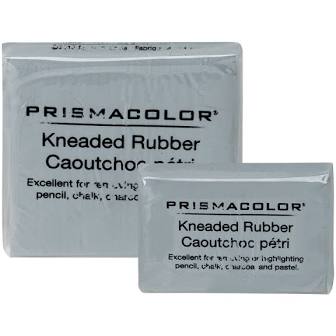
A question I often get, and one I struggle with myself, is when should I throw away my kneaded eraser? When your kneaded eraser no longer has elasticity and pulls apart too fast, is a dark dull grey……. it is time to put it to rest. Throw it out and get a new one. It has done a good job for you and should be able to retire.
This popular eraser kneads easily into shape. It’s excellent for removing or highlighting pencil, chalk, charcoal, and pastel. This eraser is not just for removing graphite or charcoal. It can also be used to lightly lay charcoal down. If you make a dark section on a scrap paper you can shape the eraser into a small paddle and pick up some of the charcoal dust to lay down in a section you might need it. You can also use the paddle shape to slightly smudge the charcoal. I have also 'sculpted' the eraser into a shape that mimics what I'm drawing to help understand it better.
And for the non-traditional erasers…:
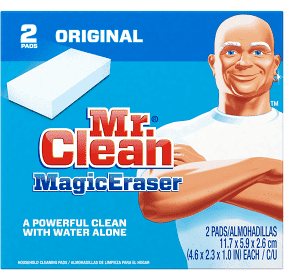
MR. CLEAN MAGIC ERASER: While technically not an eraser for drawing, it is truly remarkable in lifting crayon and magic marker off of walls. And I’ve heard of watercolor artists that use Magic Eraser to lift off watercolor from their paper. But Magic Eraser is abrasive, so use with caution.
J.D. Hillberry has on his supply list a material called Bostik Blue Tac Mastic Adhesive Putty. It’s primary purpose is to adhere paper and the like to walls without leaving a mark and is easily removable while at the same time strong. I’ve never used it so I can’t say how well it works, but it sound intriguing and is very inexpensive. And if it doesn’t work, well you have a removable adhesive.
CHAMOISE: Chamoise can remove or lighten large swaths of charcoal from paper. If you use one, get one that is soft and pliable and not synthetic. While they are ostensibly washable, they get very stiff when washed and dried and become basically unusable - at least for me.
Here is a Youtube post from J.D. Hillbery on how he uses chamois and one of his favorite toosl, a bamboo paper towel to help create texture.
SO WHAT IS THE BEST OVERALL ERASER? According to Google:
- BEST OVERALL: STAEDTLER Mars Plastic, Premium Quality Vinyl Eraser.
- BEST BANG FOR THE BUCK: Pentel Hi-Polymer Block Eraser, Large, Pack of 10.
- BEST FOR COLORED PENCILS: Tombow 67304 MONO Sand Eraser, 2-Pack. ...
- BEST FOR CHARCOAL: Faber-Castell Erasers – Drawing Art kneaded Erasers.


You Should Leave a Comment: